Why mining is finally paying attention to AI
The mining industry has historically been slow to adopt AI at scale — one 2025 industry survey attributes this to "high costs and resistance to change" (Springer, 2025). That's shifting fast: the AI-in-mining market was valued at roughly $30–41 billion in 2024–2025 and is projected to grow by a compound annual rate above 40% through the next decade (Grand View Research; SNS Insider, 2025–2026). Early adopters are already seeing concrete results — driverless technology alone has been linked to 15–20% output increases and 8–15% reductions in fuel and maintenance costs on some sites.
Here are the questions we hear most often when a mining company starts exploring whether custom AI actually makes sense for their operation.
1. Does AI even work at a site with no reliable internet?
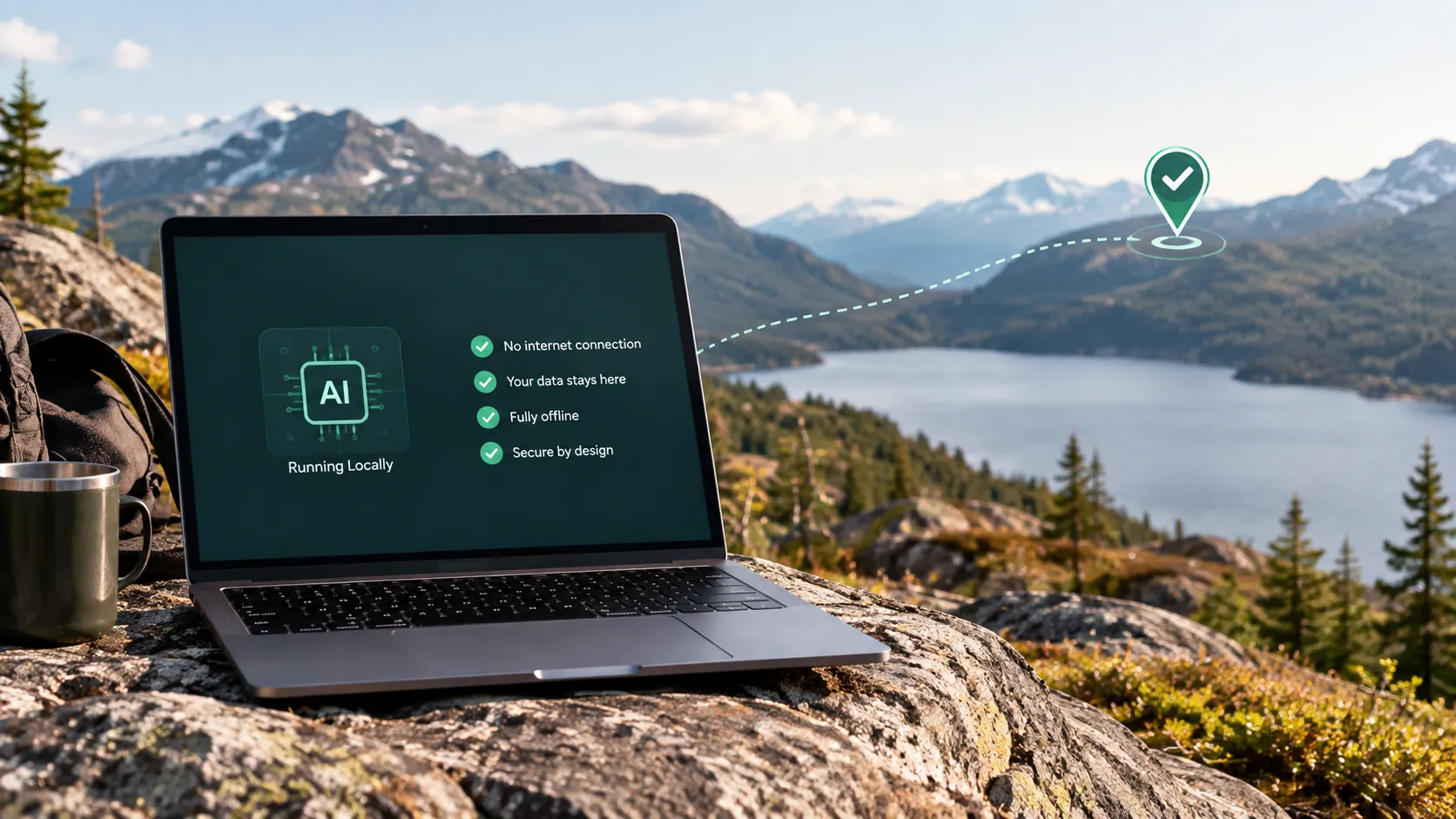
Yes — but only if it's built for that specifically. A connected AI tool depends on an internet connection to function. An air-gapped AI system runs entirely on local hardware and doesn't need one at all, which is exactly why this distinction matters so much more in mining than in most other industries.
2. What can AI actually do for a mining operation, practically speaking?
The most common starting points are: knowledge assistants trained on your site's own safety procedures and equipment manuals, maintenance and equipment tools that surface recurring issues before they become failures, and automation for repetitive reporting tasks like shift logs and inspection summaries.
3. Will this replace our safety and compliance processes?
No — it supports them. AI can automate the paperwork burden around compliance reporting, but it doesn't replace the judgment calls or the human oversight your safety processes are built on.
4. How do you keep our site data from leaving the property?
By building an air-gapped system when that's the right call — one that runs entirely on your own hardware with no internet connection, meaning there's no network path for the data to travel through.
5. Does an air-gapped system mean our data is 100% safe?
It significantly reduces the ways your data can be exposed, since there's no internet connection for anything to travel through. But no system is completely risk-free on its own — physical access, internal handling, and day-to-day use still matter.
6. Can this integrate with the equipment tracking software we already use?
Yes. A custom system should be built to connect with whatever operations, safety, or equipment software you already rely on, rather than replacing it.
7. How long does something like this take to build?
It depends on scope. A focused automation tool can move quickly. A fully air-gapped system takes longer, since everything has to be tested to run correctly without any outside connection to lean on.
8. Do we need technical staff on-site to run this?
No — a well-built system should be usable by your existing team without requiring in-house AI expertise. Training your team to use it is part of the build, not an afterthought.
9. What does ongoing support actually look like?
AI systems need tuning as your operation changes — new equipment, new sites, new processes. That's why this kind of work is typically structured as an ongoing retainer rather than a one-time handoff.
10. Is this only worth it for large-scale operations?
Not necessarily. The right starting point is usually a single, well-defined problem — repetitive reporting, or a knowledge gap when experienced staff aren't available — rather than a sitewide AI overhaul from day one.
Have a question that's not on this list? Book a free call and ask it directly.