AI adoption in logistics is happening fast
The numbers are hard to ignore: the global AI-in-logistics market was valued at roughly $24–26 billion in 2025, projected to grow toward $36–38 billion in 2026 alone (Precedence Research; Straits Research, 2026). On the ground, 72% of logistics employees had already adopted some AI tool by 2024 (ActivTrak, via Open Sky Group, 2026), and Boston Consulting Group found nearly 80% of shippers and logistics providers cite cost reduction and efficiency as AI's primary value in 2026.
But adoption isn't uniform — and a growing share of that adoption is landing on private, custom-built systems rather than off-the-shelf cloud AI tools. Here's why.
The two real constraints cloud-based tools run into
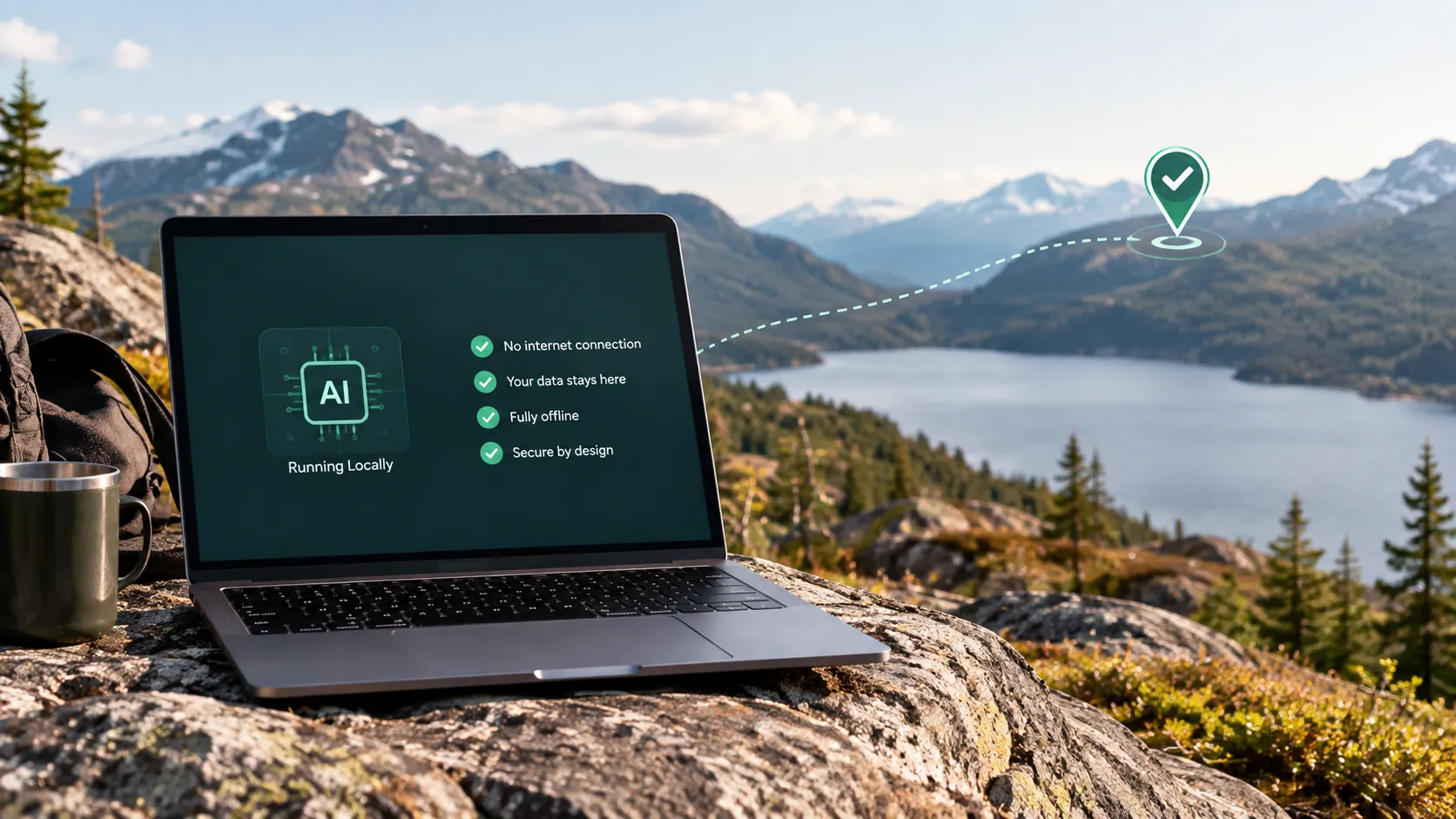
Connectivity. Warehouses, yards, and vehicles on the road don't always have a stable connection. A cloud-based AI tool that depends on constant connectivity simply stops working the moment that connection drops — which, for a fleet on the move or a remote facility, isn't a rare edge case, it's a regular occurrence.
Data sensitivity. Route data, contract terms, and customer information are all commercially sensitive in logistics — competitors would genuinely benefit from access to any of it. Sending that data through a third-party cloud AI tool means it's now sitting on infrastructure the logistics company doesn't control.
Where private, custom AI fits instead
Dispatch and operations knowledge assistants, trained on a company's own routes, protocols, and past incident history, that run without depending on a live connection.
Fleet and equipment maintenance tools that organize maintenance history and flag recurring issues using data that stays on the company's own systems.
Workflow automation for reporting — delivery logs, compliance reports, inspection summaries — handled locally rather than processed through an outside platform.
Fully air-gapped systems, for operations that can't risk route, contract, or customer data leaving their control, or that need something that works reliably at low-connectivity sites regardless of internet status.
Custom integrations with existing dispatch and fleet software, rather than requiring a switch to a new platform just to get AI capability.
The actual decision logistics companies are making
This isn't a rejection of cloud-based AI altogether — plenty of logistics use cases genuinely work well with a connected tool. The shift is toward evaluating each use case on its own terms: does this specific system need to work regardless of connectivity, and does the data involved need to stay entirely under the company's own control? When the answer to either is yes, private, custom-built AI is increasingly the practical choice, not just the cautious one.
Want to figure out which parts of your operation actually need a private system versus a connected one? Book a free call and we'll map it out together.