Two real barriers, not one
Ag-tech adoption runs into two separate problems that often get lumped together as one. The first is connectivity: a significant share of farms still lack reliable broadband, according to the Canadian Federation of Agriculture, and USDA data from 2025 shows that while 85% of U.S. farms report having internet access at all, only about half actually use it for farm business. The second is trust: a 2025 Canadian producer survey found 83% of producers had concerns about data privacy, and 89% had concerns about data ownership — meaning even producers with good internet are often hesitant to hand their operational data to outside platforms.
Any AI solution for agriculture has to solve for both, not just one.
1. Field knowledge assistants that don't need a signal
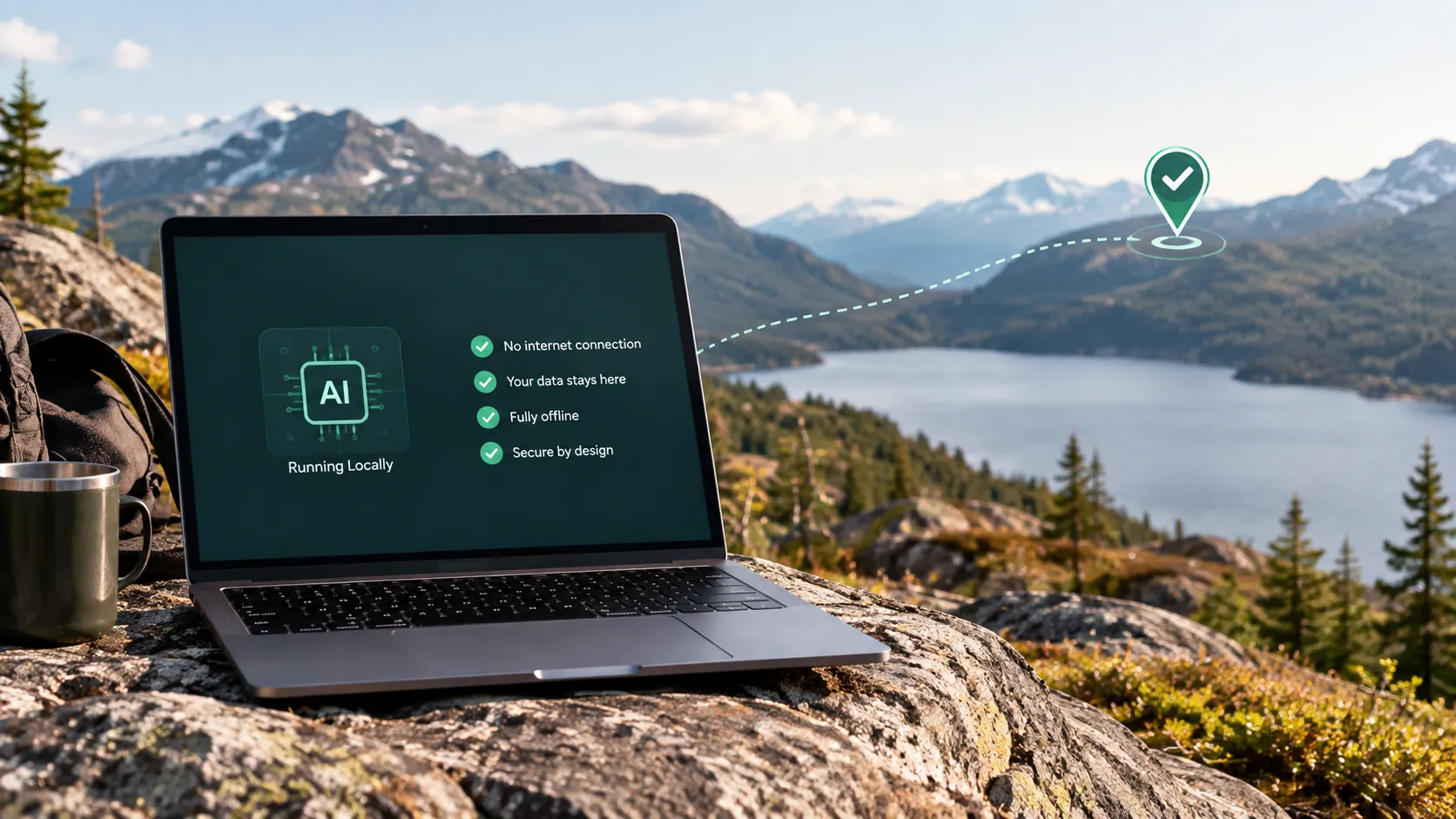
An AI system trained on your operation's own records, equipment manuals, and past seasons can run locally on a laptop or on-site server, so your team gets answers in the field without needing a live connection at all.
2. Equipment and maintenance tracking that stays on your hardware
Instead of feeding maintenance and inspection data into an outside platform, this information can be organized and surfaced by a system that runs entirely on equipment you own — addressing the data-ownership concern directly, not just the connectivity one.
3. Automated reporting that doesn't require constant sync
Yield logs, compliance reports, and inspection summaries can be automated by a system that stores and processes everything locally, syncing only when and if you choose to, rather than depending on a constant live connection.
4. Fully air-gapped systems for operations that want zero exposure
For operations that don't want any operational data leaving the property under any circumstances, an air-gapped AI system — one with no internet connection at all — removes the internet as a possible path for that data to travel through.
5. Integrations that work with equipment you already own
Rather than replacing existing equipment-tracking or yield-monitoring tools, a custom system can be built to connect with what you already use, avoiding the common ag-tech complaint (echoed as far back as a 2016 American Farm Bureau survey, where 77% of farmers expressed concern about entities accessing their farming data) of handing more data to more outside vendors than necessary.
The actual decision point
The choice isn't "AI or no AI" — most operations already have some digital tools in use. The real decision is whether a given system needs to run connected (faster to set up, lower cost) or fully air-gapped (slower, more expensive, but zero internet-based exposure). That decision should be made per use case, not as a blanket policy.
Not sure which parts of your operation actually need to run offline? Book a free call and we'll help you figure it out.